Wednesday, 9 June 2010

Patient story - Espoir Komlan

I keep forgetting to put patient stories up, and for many weeks there weren't any but finally the communications department has caught up and there are plenty for me to choose from so please enjoy this story about our orthopaedic surgeries. (Written by Elaine B. Winn, Edited by Nancy Predaina, Photos by Debra Bell and Liz Cantu)

Espoir Komlan Allabar

FOOTBALL! Just the mention of the word grabs the attention of four-year-old Espoir. A bright and very active little boy, Espoir lives in Togo, West Africa. His mother says that he " jumps everywhere all the time . " He arrived on the Africa Mercy like a bolt of electricity - energizing the entire ward.

Espoir was born with bowed legs that made him the target of teasing from the children in his first-grade class. They said his legs looked like the letter " O ." Espoir always responded, "I'm just like you !" He never let them see how their words hurt him, and he never let them discourage him. He even played a forward position on his football team.

When Espoir's mother heard a television announcement about a hospital ship that was coming to Togo to provide free surgeries, she brought Espoir to a screening. Soon he was onboard the Africa Mercy for the life-transforming surgery that would straighten his legs ... and put an end to the cruel ridicule.

Espoir is uncharacteristically still as he lies quietly in bed, recuperating with both legs straight and bandaged. He has found creative ways to keep his mind busy while his body recovers - practicing the alphabet, coloring pictures, and singing all the verses of his repertoire of songs and hymns.

His infectious joy spills out in giggles when the nurses slip the stethoscope into his ears so he can hear his heartbeat. When asked what he wants to be when he grows up, he flashes a brilliant smile and quickly responds, " I want to be a pastor!"

But for right now, he is eager to get back to his football team. " I want to go to school quickly ," he asserts. " I want to show them that I am okay now."

Appropriately, Espoir means "hope" in French. His mother says, " I named him that because I have hope for him - hope for him to be a missionary one day and help the poor like he's been helped ."

 Before surgery, Espoir's legs were very bowed.
 Nurse Laura Coles helps Espoir listen to his heart with her stethoscope while he is recuperating from surgery to straighten both legs.

Espoir uses a chair for support as part of his therapy, while at the Hospitality Center

Friday, 28 May 2010

Tani

Tani is one of our hospital patients.  I'm not sure of her story, however, I believe she may have been burnt.  She has lost a couple of fingers on her right arm, one eye is covered over and deformed and she doesn't have a nose.  Or more accurately she didn't have a nose, because she does now.  Gary Parker is our resident maxillo-facial surgeon on the ship, and among the many surgeries he performs to reconstruct peoples faces, he has created a new nose for 9 year old Tani.  In an intricate surgery he has taken a flap of skin from her scalp, twisted it around and formed it into a nose.  Why twist is round rather than cut it off?  Well eventually it will be cut off from the scalp, but when the nose is first connected leaving the blood vessels intact to supply the moved tissue increases the chance of the surgery being successful. 

However, with such surgery it is imperative to make sure the wounds (both around the new nose and surrounding areas and the donor site on the scalp which is gradually healing over) are kept clean with regular dressing changes.  So fairly regularly Tani goes to see Alainie or Jane, our nurses in charge of the wound care of our patients, particularly our plastics patients. 

Now the inpatient treatment room, where Alainie and Jane work, is next to the Biomedical Technicians office, where I work.  And the other day as I walked past to the office I saw Alainie and Tani and decided to say hello, as Alainie was explaining to Tani that I was her friend.  Normally when Tani is having her dressing changed her father is also present, however, this time he was not around, this led to a slightly more boisterous and lively Tani.  So I stuck around to see her dressing being changed.  Gradually as Alainie unwrapped her bandages and then proceeded to clean the wound Tani started to mess about and play.  She looked at the opthalmascopes (used for looking at eyes) and turned on the oxygen flowmeter, and then started playing with me.  With Alainie's music going in the background I started dancing with Tani whilst trying not to make it too difficult for Alainie to do her job!  Every so often Tani would wriggle away, she wasn't upset or crying, she just wanted to play!  And each time I tried to find something else to occupy her that kept her in the right place for Alainie.  Alainie always chats to the the patients as she is doing her work (in a mixture of broken French and English) and tells them what she is doing.  Admittedly Tani can't understand all of this, but she does know one English phrase which she kept repeating, I love you.  Eventually the dressing change was complete and she was able to go back to the wards to continue the craft she had been doing.

Why did I enjoy this so much?  Well, not only was it good fun, but I got to spend time with an adorable child.  Many of the patients who come to us with such disfigurements, particularly to their faces are incredibly shy and reserved.  They are used to be ostracised and made fun of.  But Tani was still a joyful little girl, who enjoyed playing and messing about, who was mischievous and playful.  She hadn't been so damaged by peoples reactions to her to become timid, but still had the spirit of a young child.  It was a joy to see how happy she was, and to know that she will have a new nose when she leaves us.  Hopefully when we are in Sierra Leone next year she will be able to come back and get her eye fixed as well.

Saturday, 22 May 2010

Apology

Just a quick note to say a huge sorry for the lack of posts over the last month.  This has been due to a variety of reasons, and I apologise for not keeping you up to date, however I will try and let you know a little of what I have been up to over the next few weeks.  Please enjoy the new post below about my trip to a village north of Lome.

Ando Bedo visit

On the ship we have day volunteers.  The day volunteers fill important roles on the ship, they are vital to our work here.  Some are translators, some do the hospital laundry, some help in the galley or in the dining room, others help keep the ship clean, and more still are in the engine room or up on deck.  They help us in all areas, supporting the crew and enabling us to do this work.  Most of them are Togolese, however, we do have a new other nationalities, Ghanian, Benoise, Nigerian etc and British!  Liz is a trained nurse from England, and works part time down in the OR as an anaesthetic nurse.  Liz moved to Togo at the beginning of the year with her Togolese husband and they are working as Crosslinks missionaries here with Meci doing children's ministries.

As part of their work they are doing some community development work with a village in between Lome and Kpalame, Ando Bedo.  With the village they are trying to work out where would be best to put in latrines (toilets) and a water source.  It is imperative to understand the dynamics of a village to know where to put these facilities.  Whilst their are places which may look very good to an outsider, if they affect the normal workings of the village, or go against the customs then they will not be used, no matter how much they could improve the lifestyle or health of the village.

As such they are working with the village to try to understand how the village works, and to help them understand the implications of getting a water source (they will be the only village in the area with one and will therefore get a lot of people coming to get water from them - this could have both a positive and a negative impact on the village).  About a month ago I went with Gad and Liz to visit Ando Bedo to do a mapping project with the village.  The aim was to get the villagers to draw a map of the village showing where the houses are, where people currently go to the toilet, where the church is, where the road is, and to also find out which houses have idols in as the village has quite a high prevalence of idol worship.  The village split up into two groups, the men in one and the women in another, and Liz and Gad set about encouraging them to draw the village on the ground using a stick.  They used twigs and leaves and stones to represent different things.

It was interesting for me to see a village rather than the capital city, Lomé, where we are docked.  In Lomé, there are many buildings and houses and there are proper (although rather potholed) roads and supermarkets and such like.  It is not a western city, but it is a city and it is more developed than the villages, and there is a higher level of education.  It was fascinating to see the difference in the ways the men and the women approached the mapping, and surprising to see how difficult the women found it and how they really did not know where the houses were in relation to each other.  It was sad to see women in the house next to where we were doing the mapping watching us yet not coming over to join in despite the fact that this was meant to be a whole community effort.  The village was mostly made up of very simple houses, made of mud bricks and thatched with palm leaves.  The ground was dusty and the paths were fairly ill-defined.  There is a church but it is mainly attended only by the children in the village and not the adults, and the nearby school that was built by an aid organisation (nice large brick building) is attended by the children but maybe only two days a week, the other three they farm for the teachers in 'farming school' even though they have to pay for school as well.

Hopefully in time there will be further development in this village, but it needs to be development which is owned by the village, so that they continue to use it way into the future, that they take care of it and look after it.  It needs to be something that works with their lives.  Hopefully unity will come to a village which has suffered from some form of disagreement which has separated people and caused hurt and isolation.  Hopefully true change will come and restore these people.

First a few pictures from around the village
Above:  The coloured line across the middle of the picture is the yarn from the loom where they are weaving scarf like items

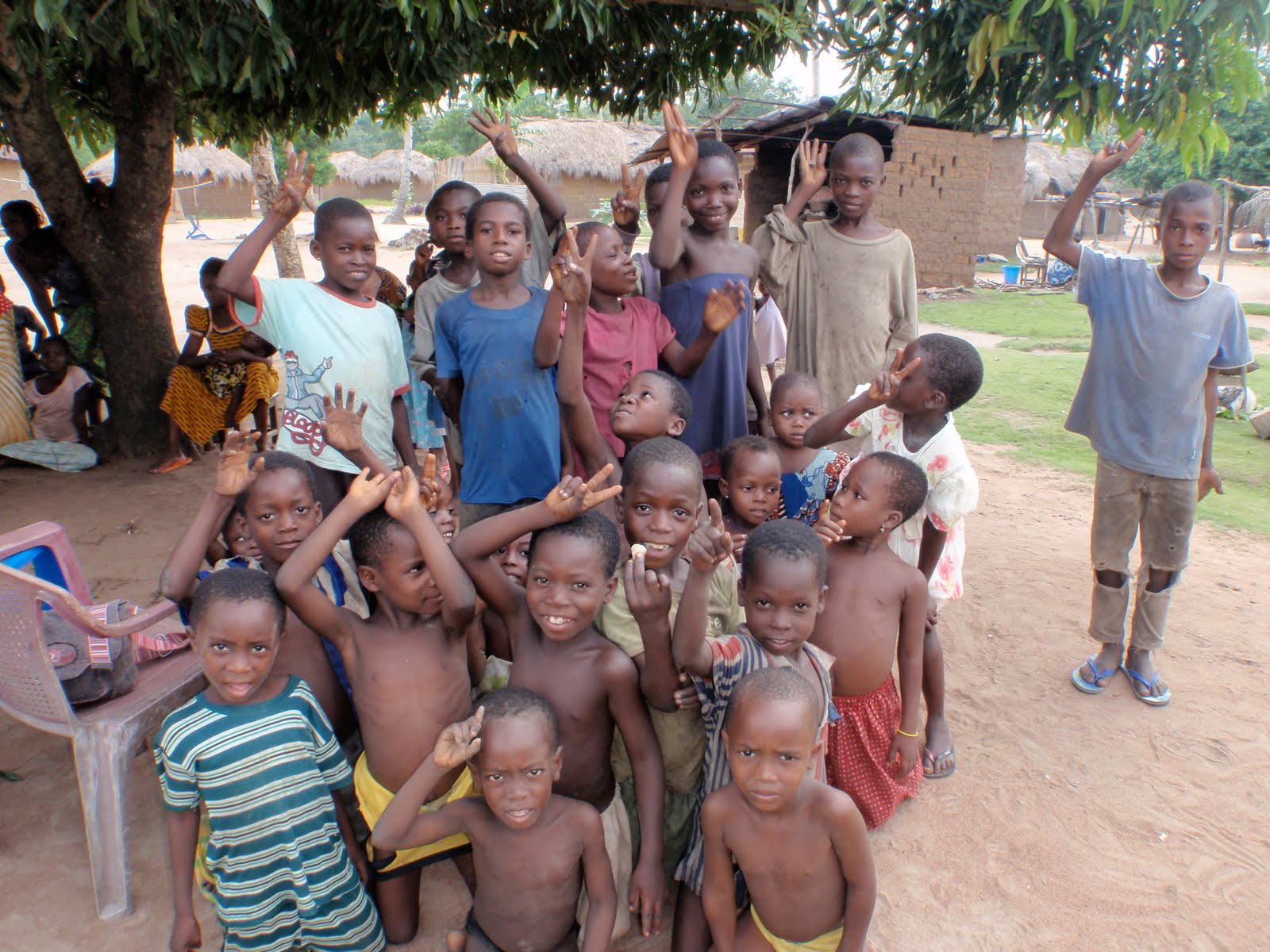
Some of the children from the village; many were very malnourished with large protruding bellies.
The start of the women's mapping process.
The finished women's map (which was alot smaller and less detailed than the men's!)
My favourite picture from my trip to Ando Bedo.

Sunday, 11 April 2010

Minor Job - Mercy Ministries

On the ship we have a minor job program that allows crew staying longer than 3 months to be allowed off work for either half a day or a day a week to participate in a different job.  The idea is that this gives people the opportunity to see a different area of the ministry of the ship, to work off-ship, to engage with local people or to work down in the hospital. 

It is very easy to live in a western bubble on the ship.  Whilst there are some real challenges to living here (such as living in such a close community, having no personal space and the constant change of people), these challenges are very different to those experienced by a traditional missionary or aid worker in the developing world.  We are very privileged to have reliable power, clean running water, and good varied food, among many other things.  Because of this it is easy to forget that you are actually in Africa and difficult to have any idea of what life is like here.  My job also requires that I work with equipment, and on the whole I like that, however, equipment doesn't have much personality and with such a small team (just two) I sometimes miss doing work that engages with people. 

As a result I decided that I would apply for a minor job with Mercy Ministries.  Mercy Ministries provides off-ship ministry opportunities for crew working alongside existing ministries demonstrating hope and healing to those who can't be reached and helped through our onboard services.  The Mercy Ministries program, run by Ines Kronester, is made up of visits to a number of different local partners in the country.  We partner with existing ministries to support and encourage them, and to ensure that the work continues after we leave the country.  The opportunities are varied and include homework clubs, orphanages, youth detention centres, the local hospital paediatric wards, HIV/AIDS women's hostels.  Anyone on the ship can sign up for a session to come out with a Mercy Ministries team.  As a team leader I am responsible for briefing the team (some of whom may have no previous experience with Mercy Ministries and may not have been on the ship long) to ensure we are respectful to the organisation we partner with, liaising with the leaders of the partner organisation, planning what the group does during the sessions and coordinating the session whilst we are at the place.  This is challenging me greatly as I need to ensure that we as a team are respectful of the people we partner with and maintain a wider picture outlook on what we do (to achieve long term goals rather than short term), which isn't always understood or shared by the participants.  My hope is that I can help them to understand more about how to facilitate long term development, and to develop deeper relationships with the people I work with through Mercy Ministries.

Monday, 5 April 2010

What do I do?

It's a good question really, and one I get asked fairly regularly on ship: what do I do?

Many would assume that I am a nurse; I live in scrubs, and frequently can be seen sporting my dragon scrub hat (necessary for venturing down the operating room corridor).  However, thankfully for the patients I am not a nurse!  I work as a biomedical technician.  But what does that mean?  Most people have never even heard of this position, let alone know what the job involves. 

Well a biomedical technician (also known as a biomedical engineer or clinical engineer) works with medical equipment.  Engineers are problem solvers, they are technical, and practical, and to some extent they like to take things apart...although not all are so quick to put them back together!  I am an engineer, and as such there is a lot of problem solving in my work.

Myself and Tony, the other biomedical technician on the ship, work in behind the scenes to keep all the medical equipment running smoothly.  We look after all sorts of equipment, from your basic temperature probes, to your patient monitoring systems (which monitor blood pressure and pulse), up to the anaesthetic machines, the CT scanner, X-ray system and the machine known as the OPG (which actually stands for Orthopantomogram - it takes a panoramic dental x-ray of the upper and lower jaw).  Not only do we look after the ward and OR equipment and the imaging systems, we also look after the laboratory (on ship), the dental clinic and the eye teams who work off ship.

Our work is very varied.  We set up the new equipment as it arrives, catalogue it and distribute it.  We perform routine maintenance and checks of the equipment to keep it in good running order, things like changing the water filters for the sterilisers.  We respond to difficulties people are having with using the equipment and we fix equipment when it breaks.  We even provide some training to guide people in how to use the equipment.

When we have problems with our equipment we review the literature we have about the equipment to find the fault and try to fix it.  Sometimes we don't have much information so we get in and do some testing and look at the equipment to try to find out what the fault is.  Sometimes we have to contact the manufacturer or their support centre to help us.

All in all my days are very varied.  Sometimes I am climbing in the small space beside the CT scanner getting information to allow us to fix the lasers, other times I am unpacking syringe pumps or emergency suction units and putting them into our system.  Other days I am conference calling with a support centre in Israel, or making power cords safe again after the wires have been pulled out.  No day is ever the same, but life would be dull if it was!

(Picture to follow)

Sunday, 14 March 2010

Ward church!

On Sunday mornings down on one of the wards, something special happens.  Patients, staff and Mercy Shippers gather to praise God and worship together.  Led by our Togolese crew member (Clementine) and the day workers we have an hour long service full of praise, prayer and a message.  The songs are African and sung whole heartedly, accompanied by drums and various other percussion instruments, with clapping and dancing, by the patients and day workers alike.  Some patients are able to get up and dance, some have both legs in plaster casts, but this doesn't stop them dancing, their upper bodies are swaying and moving in time with the rhythm, their arms are up in the air and they are singing loudly.  A patient shared his story of how he had been suffering with his illness for many years, but how God sent his servants to heal him and he is now feeling very well.  It is a wonderful opportunity for three different groups of people to join together, the Africa Mercy crew, the day volunteers and the patients, and share together, and it was obvious from the participation and the smiles and dancing and clapping that everyone was blessed by being there.   

Monday, 22 February 2010

Dental clinic set up

As part of my job I help oversee the medical equipment used for our offship dental clinic.  This off ship clinic is where we provide free dental work for the people of Togo.  It can include fillings, cleanings, tooth removals and abscess removals.  Unlike many western people who generally aren't a fan of dentists, the people of Western Africa are often incredibly pleased to have an opportunity to see a dentist.  Many have suffered with tooth ache or other such maladies for a considerable time, and welcome the relief that is brought when the Mercy Ships dental team work to treat their dental problems. 

The dental clinic is based a 20 minutes drive from the ship in a three storey building which thankfully has some air conditioning (when the Lome power is on!).  On the ground floor is the wonderful receptionist Joyce and the dental educator, who teaches the people dental hygiene whilst they are waiting.  On the first floor in a large open plan room there are stations for 8 dentists and 1 hygienist.  And on the top floor there are the generators which supply the power for all the dental equipment, the compressors which provide the air for the dental units, and the sterilising room.

I spent two days out at the dental clinic helping set up the equipment and get the new suction units installed.

The place where people get their teeth pulled!

 
Refuelling the generators
Starting up the generators


Getting to work

Saturday, 13 February 2010

Hello Togo!

As we approached the dock the mass of colour and sound came into focus.  Awaiting our arrival at the end of the dock was a large group of people who were singing and dancing and praising God.  The Togolese churches had joined our advanced team to welcome us, bringing with them an ensemble of brass instruments and drums, which rang out a song we had learnt only the day before on the ship, There is no other God.  The mass of colourful outfits was astounding, many of the Africans dressing in their best clothes to welcome us, they waved scarves and other fabric as they danced, a great display of excitement as the ship pulled in, making their way along the dock with us until we ground to a halt and our mooring lines were attached.  As we stood and watched from deck 7 and 8 the first of our crew went down the gangway meet the Togolese dignitaries.  We have arrived in Togo!

 
The Pilote boat delivers the pilot to us who directs us through the port waters safely to our dock.

  
 One of the tugs that shuffles us into position, carrying some of our advanced team and land based personnel.

  
Some of the crowds gathered to meet us (including buses from the local churches and a very large drum!)

  
 The Togolese navy who live next to us, and lots of green trees!

Tuesday, 2 February 2010

And we sail

Sunday just after lunch we left Tenerife and set off on route to Togo.  Unfortunately there has been a low pressure system out to the West of us and that is pushing some rather uncomfortable wave fronts towards us, resulting in a few days of rather rocky sailing, lots of spilt milk (literally rather than figuratively!) and difficult sleeping conditions.  Hopefully though as we move further down the coast things will settle down and be more comfortable so we can sleep a bit better and arrive at our destination well rested and ready to hit the ground running to serve the people of Togo.  On a brighter note though we have already been privileged to see some whales and dolphins!

The journey of the Dronning Ingrid

Imagine you are the Dronning Ingrid: a rail ferry, that chugs across the Baltic Sea connecting Danish islands.  You are content,  your flat bottom sails smoothly across the sea, transporting your cargo.  Then they build a road....a road that connects your two islands, and you're just not so popular anymore.  You feel your world crashing around you, but alas someone see something in you that no-one else would ever imagine, and suddenly there is hope for you.  You won't just become scrap metal, torn to pieces in a shipyard, instead you will change the world! 

But before you can do this you need a major facelift, in fact not just a facelift, but major reconstructive surgery, shoving new parts inside you (deck 4) and bits on top of you (family cabins deck 6 and 7 aft).  To some extent ripping out whole chunks of you, yet somehow managing to still keep the core of you alive.  Years pass as people grapple with your insides until you are transformed, and out of your butchered shell, once resembling a rail ferry, emerges something unlikely, a hospital.  One that looks to bring hope and healing to the world's forgotten poor. 

You are now the Africa Mercy, and you are raring to serve the people of West Africa.  But to do this you have to get to them.  You have left the safe waters you used to operate in, but you are unfazed, and excitement fills you as you travel down to West Africa.  You are braving the the Atlantic ocean to give free operations to the people of West Africa, and you are filled with joy. 

But life is hard.  You are no longer as young as you used to be, at over 20 years old you are way past your prime (remember you are a ship), and the toils of your work are beginning to show.  You were not designed for the Atlantic ocean, and your flat bottom causes you to rock and roll so violently that just occasionally you fling your precious cargo around with tremendous force.  But you were also not designed to sit in port, not least an African port for months and months at a time.  Parts of you start to cease up, and parts get clogged, and generally you lose motivation to keep going.  You are tired and you ache.

However, once a year you leave Africa to go somewhere else, somewhere cooler and calmer.  Where people come to visit you and to tend to your aching wounds.  Where you have a nice long bath (tank scrubbing and engine cleaning), and your have your annual MOT, and your safety gear is checked and replaced.  And to top it off your prized possession, your hospital is given much needed time off duty to allow the various pieces of medical equipment to be overhauled, updated, and fixed; to have exciting new equipment and pressured airlines installed; and generally to clear up the mess of tired equipment left from the past outreach and prepare for the upcoming year.  Really it's not much of a break for you, more like a combination of a health check/ deep cleaning treatment, with some minor surgeries, but you feel so much better for it, ready and renewed for the next adventure, back where you belong off the coast of West Africa.  

 
The Dronning Ingrid coming into dock in Denmark ready to disembark her trains

 
The ‘new’ Deck 4 (where my cabin is) being installed over the rail deck (deck 3) where the hospital is.
 
The Africa Mercy after the conversion.

 (Pictures from Mercy Ships)

Sunday, 17 January 2010

My cabin

Sorry for the delay since my last post, I have taken a bit of a break over the Christmas and New Year period to spend some time actually settling here.  After many changes since I graduated in June I am now in one place for a while and really wanted to settle here.  Just before Christmas I moved rooms, and after a slow process of sorting my stuff out I finally have my cabin tidy enough for me to feel happy putting pictures up for everyone to see!  I live in a four berth cabin, however, am currently blessed to only have one cabin mate which means we each get a little section to ourselves.

This is the corridor I live down, the door on the far right is my cabin.

This is the view as you enter my cabin, the first door is the bathroom, and then there are two curtained cubicles and a sitting area with a fridge!!! at the end.


The bathroom is small but perfectly functional (most of the time - occasionally the vacuum system struggles and the shower takes a long time to drain or the toilet doesn't flush, but on the whole it works well).  We don't have a bath (not enough space and use too much water), and shower should only use two minutes of water (but can take longer as you switch it off whilst you put the shampoo on).

Next we go past Lisa's bunk (one of my Gateway family who works as hospital administrative assistant)


The we get to my bunk.  Currently as we have only two in the cabin we each have our own bay and have folded the extra bed up to give us a little more space, normally we would each have a bunk above ours.  The double wardrobe furthest from the corridor (covered in photos) is mine and the other will belong to my bunkmate once they arrive.


With a little sitting area at the end.

All in all, it is a nice cabin.  My parents will testify though that it is a noisy cabin with the generators constantly chugging along (and that's with the hospital in between us and them!), but you get used to it, and I am quite able to sleep hearing them.  Space is limited and you have to get creative as to how best to store things, however, we have far more storage than the 6, 8 and 10 berths, and I have managed to find a home for all my stuff.  Just a little picture of my world now!